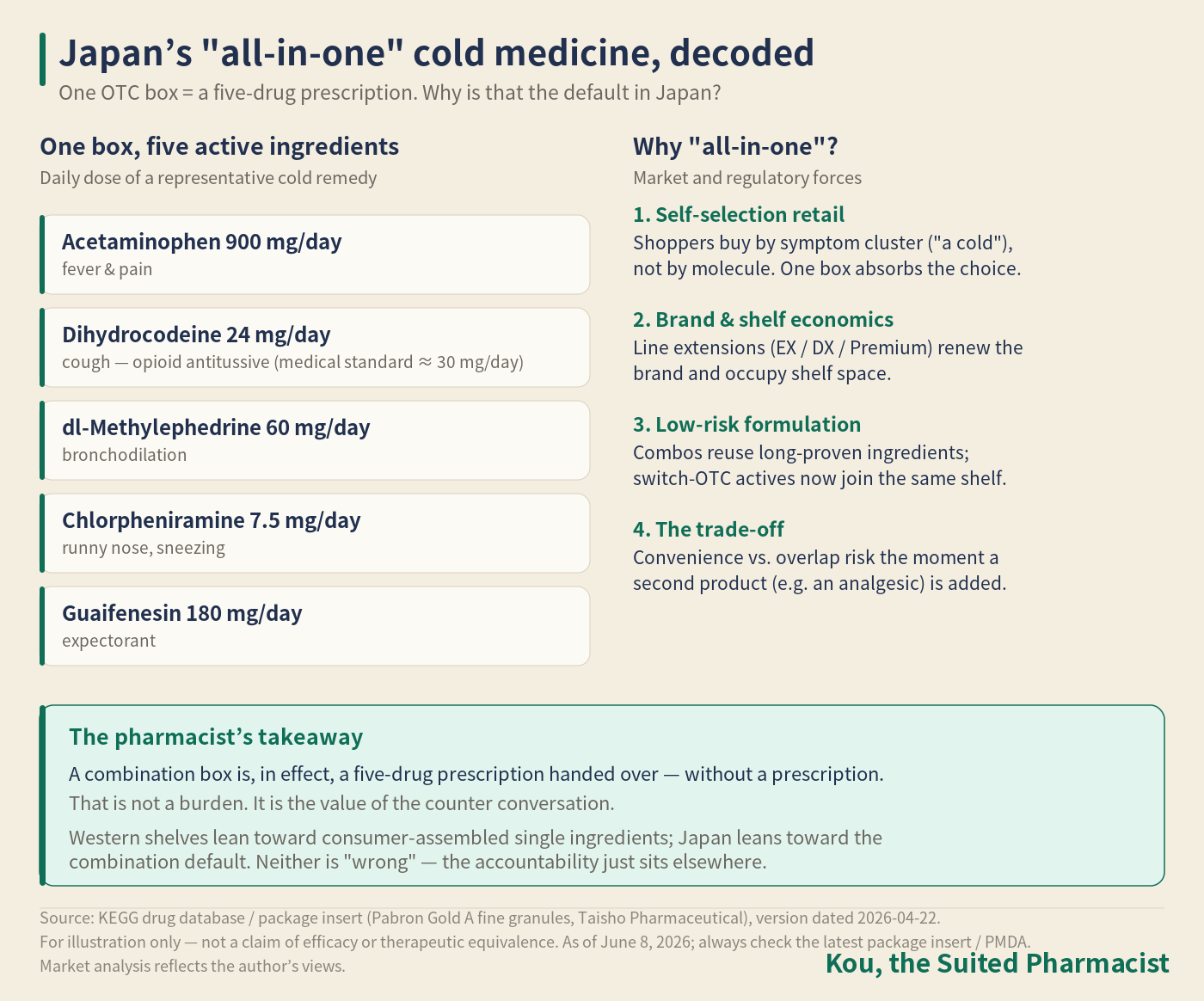
日本の一般的な「総合感冒薬」を病院の処方に置き換えると、1箱で5種類の有効成分を同時に使うことになります。解熱鎮痛薬、鎮咳薬、気管支拡張薬、抗ヒスタミン薬、去痰薬です。
Translate a typical Japanese "general cold remedy" into a hospital prescription, and one box becomes five active drugs at once: an antipyretic-analgesic, an antitussive, a bronchodilator, an antihistamine, and an expectorant.
これは偶然生まれた処方設計ではありません。日本に深く根づいた市場と規制のあり方です。複数成分を含むかぜ薬はどこにでもあり、NyQuil、DayQuil、Therafluも配合剤です。違うのは、配合の度合いと、何を標準とするかです。日本の売り場では、オールインワンの1箱を買うことが標準とされています。欧米市場では、消費者が自分で組み合わせる単一成分製品の選択肢がより多く、プソイドエフェドリンなど一部の有効成分は、店員を介して販売されるカウンター内で管理されています。
This is no accident of formulation. It is a market and regulatory pattern with deep roots in Japan. Multi-ingredient cold products exist everywhere — NyQuil, DayQuil and Theraflu are combinations too. What differs is degree and default. Japan's shelf treats the all-in-one box as the standard purchase. Western markets give more room to single-ingredient products the consumer assembles, and keep some actives, like pseudoephedrine, behind the counter.
実際に1箱に入っているもの
What's actually in the box
代表的な製品を取り上げましょう。1日分の処方として見ると、有効成分は次のように並びます。
Take a representative product. As a daily prescription, its active ingredients line up like this:
アセトアミノフェン:約900 mg/日:発熱と痛み
ジヒドロコデイン:約24 mg/日:せき(オピオイド系鎮咳薬。医療用の標準量は約30 mg/日)
dl-メチルエフェドリン:約60 mg/日:気管支拡張
クロルフェニラミン:約7.5 mg/日:鼻水、くしゃみ
グアイフェネシン:約180 mg/日:去痰
Acetaminophen ~900 mg/day — fever and pain
Dihydrocodeine ~24 mg/day — cough (an opioid antitussive; medical standard is ~30 mg/day)
dl-Methylephedrine ~60 mg/day — bronchodilation
Chlorpheniramine ~7.5 mg/day — runny nose, sneezing
Guaifenesin ~180 mg/day — expectorant
これにカフェインとリボフラビンが加わります。(成分量はKEGG医薬品データベース/添付文書によります。)
Plus caffeine and riboflavin. (Ingredient figures from the KEGG drug database / package insert.)
これらの用量は、名目だけの少量ではありません。ジヒドロコデインは医療用の標準量に近く、処方薬のコデインに適用される12歳未満への禁忌は、こちらにも適用されます。「OTCだから弱い」という考え方は成り立ちません。
These doses are not token amounts. The dihydrocodeine sits close to the medical standard, and the under-12 contraindication that applies to prescription codeine applies here too. "OTC therefore weak" does not hold.
日本でオールインワンが広まった理由
Why Japan went all-in-one
4つの要因が、互いに作用しています。
Four forces, working together.
1. 消費者が自分で選ぶ小売の仕組み。日本の消費者の大多数は、成分名ではなく、「かぜをひいた」というような症状のまとまりをもとにかぜ薬を買います。発熱、せき、鼻づまり、鼻水を1箱でカバーできる製品は、実際の買い方に合っています。単一成分製品が並ぶ棚では、選ぶ負担を購入者が負います。配合剤の1箱は、その負担を引き受けます。
1. Self-selection retail. Japanese consumers overwhelmingly buy cold medicine by symptom cluster — "I have a cold" — not by molecule. One box that covers fever, cough, congestion and runny nose fits how people actually shop. A shelf of single-ingredient products puts a selection burden on the buyer; the combination box absorbs it.
2. ブランドと売り場の経済性。配合剤のブランドは、EX、DX、「プレミアム」、「α」といった際限のないシリーズ展開を可能にします。それぞれが売り場の陳列面を確保し、ブランドのライフサイクルを更新します。これは消費者を欺く行為ではなく、メーカーにとって合理的な戦略です。ブランド資産と配合処方を組み合わせれば、競争から守りやすく、利益率の高い地位を築けます。一方で、製品名が次々と飾られていく現象も生まれ、規制当局は消費者にとっての分かりやすさの問題として指摘しています。これは今後の記事で取り上げるテーマです。
2. Brand and shelf economics. Combination brands support endless line extensions — EX, DX, "Premium," "α" — each holding shelf facings and renewing the brand's lifecycle. This is rational manufacturer strategy, not deception: brand equity plus combination formulation is a defensible, high-margin position. It also produces the naming inflation that regulators have flagged as a clarity problem — a topic for a future issue.
3. スイッチOTCという経路。多くの配合剤は、長年の市場実績がある成分で構成されています。近年は、スイッチOTCの有効成分も同じ売り場に加わっています。特性がよく分かっている成分を1つの製品に組み合わせることは、リスクを抑えて新製品を発売する方法です。
3. The switch-OTC pathway. Many combinations are built from ingredients with long market track records, and in recent years switch-OTC actives have joined the same shelf. Combining well-characterized ingredients into one product is a low-risk way to launch.
4. 誰も織り込んでいない代償。便利さには、成分の重複という代償があります。消費者が配合剤に別の鎮痛薬を「追加」した瞬間、アセトアミノフェンが重複する可能性があります。日本の添付文書が、ほかのかぜ薬、解熱鎮痛薬、鎮咳薬、抗ヒスタミン薬との併用を禁じているのは、まさにこのためです。オールインワンという設計は、2つ目の製品が登場する直前までは効率的なのです。
4. The trade-off nobody prices in. Convenience has a cost: ingredient overlap. The moment a consumer "tops up" a combination remedy with a separate analgesic, acetaminophen can double up — which is exactly why Japanese package inserts forbid concurrent use of other cold remedies, analgesics, antitussives and antihistamines. The all-in-one design is efficient right up until a second product enters the picture.
設計と現実が出会うのはカウンター
The counter is where the design meets reality
ここからが、薬剤師と登録販売者にとって重要な点です。
Here is the part that matters for pharmacists and registered sellers.
お客様に配合かぜ薬を1箱渡すことは、機能的には、処方箋なしで、5種類の薬の処方を手渡すことに相当します。こう捉えることは、負担を増やすためではありません。カウンターでの会話にどれほどの価値があるかを、最も明確に表しています。「今、ほかのかぜ薬や痛み止めを飲んでいますか」という一つの質問が、処方箋5行分に相当する重複確認の役割を果たすのです。
Handing a customer a combination cold box is, functionally, handing over a five-drug prescription — without a prescription. That framing isn't a burden. It is the clearest statement of what the counter conversation is worth. One question — "are you taking any other cold or pain medicine right now?" — does the work of five prescription lines of overlap-checking.
欧米市場では、消費者が単一成分製品を自分で組み合わせる形への依存がより大きいため、判断に必要な負担の配分が異なります。購入者自身が組み合わせを考える分、成分の重複も売り場で見えやすくなります。日本の配合剤モデルは、薬理作用を1箱に詰め込み、それとともに販売時点に責任を集約します。どちらのモデルも「間違い」ではありません。設計が異なり、責任の置かれる場所も異なるのです。
Western markets lean more on consumer-assembled single-ingredient products, so they spread that cognitive load differently: the buyer does more of the assembling, and overlap is more visible on the shelf. Japan's combination model packs the pharmacology into one box and, with it, packs the responsibility into the point of sale. Neither model is "wrong." They are different designs, with the accountability sitting in different places.
セルフメディケーションが広がる中で自らの存在意義を訴える専門職にとって、これは強力な根拠です。1箱が果たす役割が増えるほど、カウンターの重要性も高まります。
For a profession arguing for its own relevance as self-medication expands, that is a strong hand to hold: the more the box does, the more the counter matters.
戦略面から読み取れること
The strategic read
メーカーにとって、配合剤モデルは長く維持できる事業基盤です。しかし、棚を埋める製品名やSKUの増殖は、今や消費者にとっての分かりやすさという観点から規制当局の関心を集めています。販売側では、スイッチOTCの拡大により、消費者が自分で選ぶ売り場へ、より多くの薬理作用が持ち込まれ続けています。その結果、専門家の助言の価値は下がるどころか高まります。どちらの動きも同じ方向を示しています。製品ができることは増え、カウンターに立つ人が、適切な使用を管理する要になりつつあるのです。
For manufacturers, the combination model is a durable franchise — but the same naming and SKU proliferation that fills shelves is now drawing regulatory attention to consumer clarity. For the channel, switch-OTC expansion keeps loading more pharmacology onto the self-selection shelf, which raises the premium on professional advice rather than lowering it. Both trends point the same way: the product is getting more capable, and the human at the counter is becoming the control point.
(分析には著者の見解が含まれます。事業や投資に関する判断は、ご自身で行ってください。)
(Analysis includes the author's views; business and investment judgments are your own.)
次回:ブランド名のインフレ(EX/DX/プレミアムの問題)と、OTC売り場におけるSKUの増殖。
Next issue: brand-name inflation (the EX / DX / Premium problem) and SKU proliferation on the OTC shelf.
免責事項
Disclaimer
本記事の規制分析は著者個人の理解に基づくものであり、公式な法的助言や規制上の助言を提供するものではありません。規制は頻繁に変わるため、事業上の意思決定を行う前に一次資料で確認してください。
The regulatory analysis in this article reflects the author's personal understanding and does not constitute official legal or regulatory advice. Regulations change frequently — verify with primary sources before making business decisions.
More from the author
Read on note, or subscribe to the Japanese and English publications on Substack.
Sharing uses the publicly accessible original article URL.