病院の会計で1,500円を払い、明細に「3割負担」と書かれている。では、残りの3,500円は誰が払っているのでしょう。
You pay ¥1,500 at the hospital, and the statement says “30% copayment.” Who, then, pays the remaining ¥3,500?
答えは、主に健康保険の運営主体です。私たちと会社が納める保険料、国や自治体の税金を使い、医療機関へ支払います。
The answer is mainly the organizations that operate health insurance. They pay medical institutions using the premiums paid by us and our employers, along with taxes from national and local governments.
ここが分かると、病院の3割負担と市販薬の全額負担を同じ物差しで比べられます。受診か市販薬かを考えるときも、値札だけでなく、症状・費用・時間の順に判断しやすくなります。
Understanding this lets you compare a hospital's 30% copayment with paying the full price for an OTC medicine on the same basis. When considering medical care or an OTC medicine, it also makes it easier to consider symptoms, costs, and time in that order, rather than the price tag alone.
「3割」は、医療費全体の3割
“30%” means 30% of the total medical cost
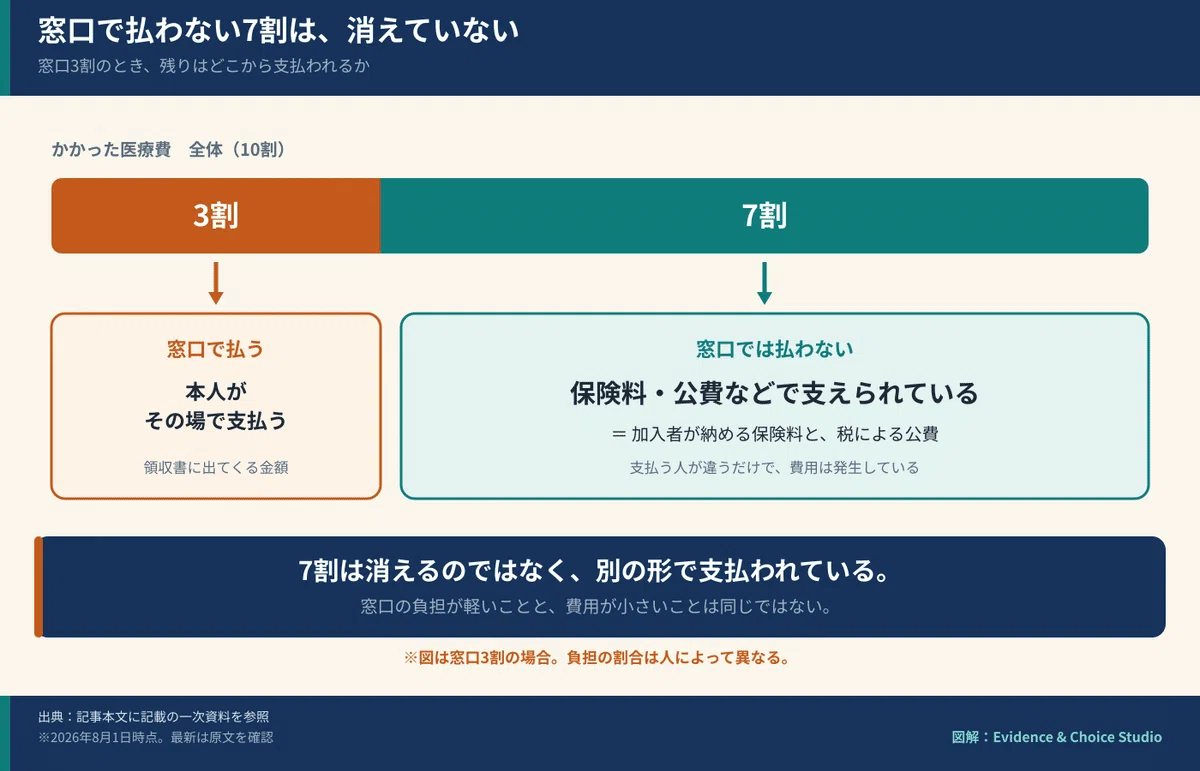
現役世代の多くは、保険診療の医療費の3割を窓口で負担します。医療費が5,000円なら、窓口では原則1,500円。残りの3,500円は、加入している健康保険組合、協会けんぽ、市町村国保などの保険者が医療機関へ支払います。
Many working-age people pay 30% of insured medical costs at the counter. If the total medical cost is ¥5,000, the payment is generally ¥1,500. The remaining ¥3,500 is paid to the medical institution by the person's insurer, such as a health insurance society, the Japan Health Insurance Association, or a municipal National Health Insurance program.
保険者とは、保険料を集め、必要な医療費を支払う運営主体のことです。会社員なら保険料の一部を会社も負担しています。国や自治体の税金も入ります。
An insurer is the organization that collects premiums and pays the necessary medical costs. For company employees, the employer also pays part of the premiums. Taxes from national and local governments contribute too.
つまり、残り7割は「誰か一人」が払うのではありません。加入者、勤務先、国や自治体が、制度を通じて分け合っています。
In other words, the remaining 70% is not paid by “one particular person.” Enrollees, employers, and national and local governments share it through the system.
国全体では、「その他」12.3%のうち患者負担が11.8%
Nationally, patient payments account for 11.8 percentage points of the 12.3% “other” category
厚生労働省が公表した令和5年度の国民医療費は、48兆915億円でした。財源別に見ると、保険料が50.2%、公費が37.5%、その他が12.3%です。その「その他」のうち、患者負担は11.8%を占めます。
National medical expenditure for fiscal 2023, as published by the Ministry of Health, Labour and Welfare, was ¥48.0915 trillion. By funding source, insurance premiums accounted for 50.2%, public funds for 37.5%, and other sources for 12.3%. Patient payments accounted for 11.8 percentage points within that “other” category.
個々の会計では1〜3割を払っていても、子どもや高齢者、公費負担医療などを含む国全体では、患者が直接払う割合は約1割になります。
Even though individuals pay 10–30% at the counter, across the country, including children, older people, and publicly funded medical care, the share paid directly by patients is about 10%.
ここを知ると、「病院の薬は安いのに、市販薬は高い」という逆転も解きほぐせます。処方薬は薬の値段だけでなく、診察や調剤を含む医療費の一部を窓口で払います。市販薬は原則として全額を自分で払うため、値札だけなら高く見えることがあります。
Understanding this also helps explain the apparent reversal that “hospital medicines are cheap, but OTC medicines are expensive.” With prescription medicines, you pay part of the medical costs, including consultation and dispensing, rather than just the price of the medicine. OTC medicines are generally paid for entirely out of pocket, which can make them look more expensive when comparing price tags alone.
受診か市販薬かは、症状から決める
Decide between medical care and an OTC medicine based on symptoms first
残り7割の仕組みを知っても、「保険を使わないほうがよい」という結論にはなりません。診断が要る症状、長引く症状、いつもと違う症状は、受診して原因を確かめる必要があるからです。
Understanding how the remaining 70% is funded does not lead to the conclusion that “it is better not to use insurance.” Symptoms that require a diagnosis, persist, or differ from usual need medical attention to establish their cause.
一方、原因と対処法が分かっている軽い不調なら、市販薬で対応できる場合があります。そこで比べるのは、薬の値段だけではありません。
On the other hand, an OTC medicine may be an option for a minor problem whose cause and management are understood. The comparison then involves more than the medicine's price.
今回は自分で対処できる軽い症状か
受診して原因を確かめる必要があるか
移動や待ち時間を含め、どちらが自分に合うか
Are these mild symptoms I can manage myself this time?
Do I need medical attention to establish the cause?
Which option suits me, including travel and waiting time?
この順番なら、費用だけを理由に受診を控えずに済みます。最初に見るのは、制度ではなく自分の状態です。
Considering things in this order helps avoid delaying medical care solely because of cost. Start with your own condition, rather than the system.
薬剤師からひとこと。市販薬を選べるか迷ったら、薬局やドラッグストアで「受診したほうがよい症状か」から聞いてください。商品を選ぶ前の相談でもかまいません。
A word from a pharmacist: If you are unsure whether an OTC medicine is appropriate, start by asking at a pharmacy or drugstore, “Are these symptoms something I should see a doctor about?” You can consult before choosing a product.
窓口の3割は、医療費の全体ではありません。残りを誰が支えているかを知ったうえで、必要な医療は使い、軽い不調では別の入口も選べる。それがセルフメディケーションの現実的な形です。
The 30% paid at the counter is not the whole medical cost. Understanding who supports the rest helps you use necessary medical care while considering another route for minor problems. That is a practical form of self-medication.
※本記事は一般的な情報提供で、個別の診断・治療や受診抑制を目的とするものではありません。自己負担割合は年齢・所得・制度により異なります。国民医療費の数値は令和5年度統計であり、2026年8月18日時点で確認できた最新の公表値です。
Note: This article provides general information and is not intended as an individual diagnosis or treatment recommendation, or to discourage medical visits. Copayment rates vary by age, income, and program. The national medical expenditure figures are from fiscal 2023 statistics, the latest published figures that could be confirmed as of August 18, 2026.
記事の掲載先
noteで読むほか、Substackでは日本語・英語の各媒体を購読できます。
共有するのは、どなたでも開ける公開原文のリンクです。