スマートフォンで「市販薬乱用、11.7倍」という見出しを見ると、日本人全体で乱用する人が11.7倍になったように受け取りやすくなります。大きな数字ほど、意味を確かめる前に印象が残ります。
Seeing a headline on a smartphone that says “OTC medicine misuse up 11.7-fold” can easily leave the impression that the number of people misusing these medicines across Japan has risen 11.7-fold. The larger the number, the more likely it is to make an impression before its meaning is checked.
結論から言うと、約11.7倍になったのは、全国の精神科施設調査で把握された、現在の精神症状に最も関係する薬物が市販薬だった患者の記録数です。日本で暮らす人全体に近い集団で、市販薬乱用の割合が11.7倍になったことを示す数字ではありません。
To state the conclusion first, the approximately 11.7-fold increase refers to the number of patient records identified in a nationwide psychiatric facility survey in which an OTC medicine was the drug most closely associated with current psychiatric symptoms. It does not show an 11.7-fold increase in the prevalence of OTC medicine misuse in a population broadly representative of people living in Japan.
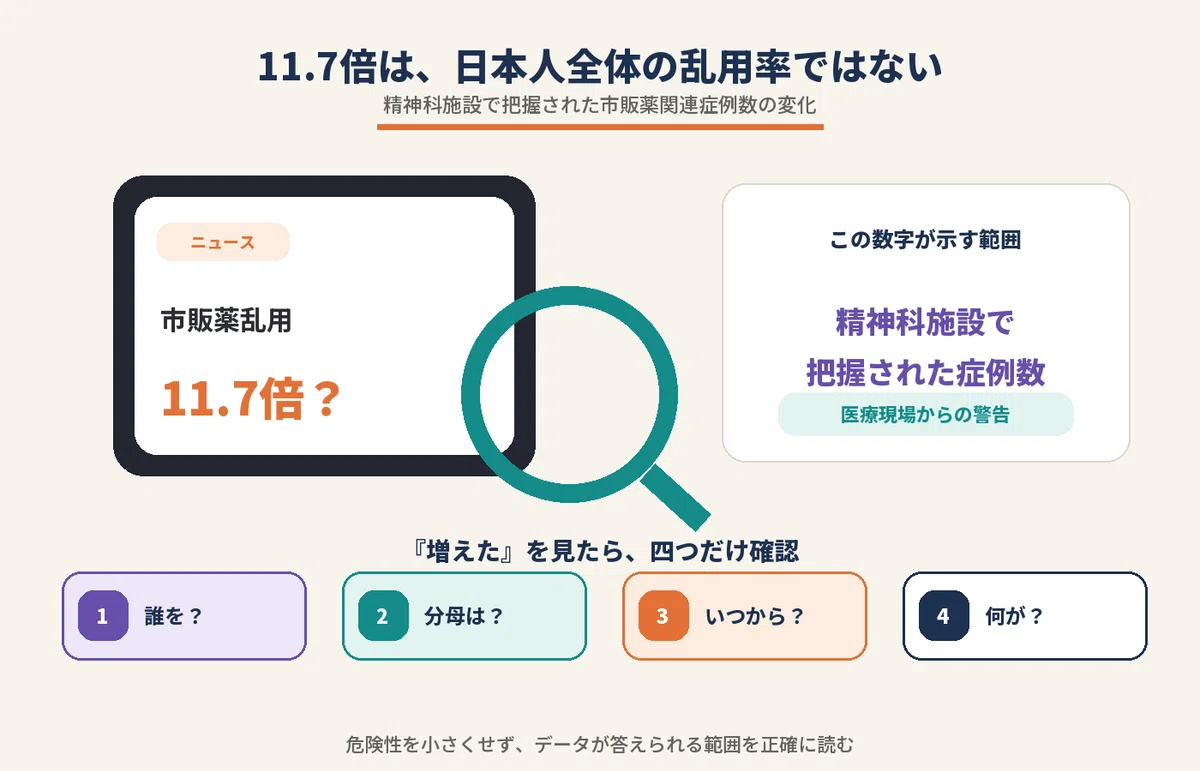
11.7倍は、誰の数字か
Whose numbers does the 11.7-fold figure describe?
2024年の調査は、9〜10月の2か月間に、参加した精神科施設の入院・外来で診療を受けた薬物関連の患者を調べました。分析できた2,702例のうち、市販薬が現在の精神症状に最も関係すると判断されたのは409例(15.1%)です。
The 2024 survey examined patients with drug-related problems seen as inpatients or outpatients at participating psychiatric facilities over the two months of September and October. Of the 2,702 analyzable cases, OTC medicines were judged to be the drugs most closely associated with current psychiatric symptoms in 409 cases (15.1%).
過去1年に、現在の精神症状に最も関係する薬物を使っていた1,221例に限ると、市販薬は312例(25.6%)でした。この25.6%は「国民の4人に1人」ではなく、精神科で把握された特定の患者群の中での割合です。
Among the 1,221 cases in which the drug most closely associated with current psychiatric symptoms had been used within the past year, OTC medicines accounted for 312 cases (25.6%). This 25.6% does not mean “one in four people in Japan.” It is the proportion within a particular group of patients identified in psychiatric care.
同じ系列の精神科施設調査では、市販薬関連の患者記録数が2012年から2024年に約11.7倍になったとされています。ただし、受診や診断の変化も数字に影響し、長い期間には薬物分類の扱いが完全に同じではない可能性もあります。
In the same series of psychiatric facility surveys, OTC-related patient records reportedly increased approximately 11.7-fold from 2012 to 2024. However, changes in care-seeking and diagnosis also affect the numbers, and drug classifications may not have been handled entirely consistently over such a long period.
したがって11.7倍は、一般人口の増加率ではなく、精神科医療の現場で市販薬の問題が目立つようになったことを知らせる警告として読むのが適切です。
The 11.7-fold figure is therefore best read as a warning that OTC medicine problems have become more prominent in psychiatric care, rather than as a rate of increase in the general population.
389例の研究が調べたこと
What the study of 389 cases examined
2026年に公表された研究が詳しく比べたのは、2024年調査の409例から、最初に乱用した薬物が不明な例など20例を除いた389例です。11.7倍という増加率を新たに計算した研究ではありません。
The study published in 2026 closely compared 389 cases from the 409 cases in the 2024 survey, excluding 20 cases for reasons such as an unknown first drug of misuse. It did not newly calculate the 11.7-fold increase.
研究では、最初に乱用した薬物が違法薬、処方薬、市販薬のどれだったかで389例を分け、年齢や性別、ほかの精神疾患、自傷・自殺企図の記録、治療や支援の利用状況などを比べました。
The researchers grouped the 389 cases according to whether the first drug misused was an illegal drug, a prescription medicine, or an OTC medicine. They compared age, sex, other psychiatric conditions, records of self-harm and suicide attempts, and use of treatment and support, among other factors.
分かったのは、精神科受診に至った市販薬関連の患者に、どのような特徴がみられたかです。市販薬を使う人全体や、日本人全体で乱用がどれだけ増えたかを測ったものではありません。
The findings describe the characteristics of OTC-related patients who reached psychiatric care. They do not measure how much misuse increased among all OTC medicine users or across Japan's population.
一般人口と、成分別の数字
General-population and ingredient-specific figures
日本で暮らす人全体に近い集団を無作為に選んだ調査では、過去1年の市販薬乱用経験率は、2023年の有効回答3,026人で0.75%、2025年の有効回答3,156人で0.26%でした。数字は下がりましたが、その差が偶然のばらつきを超えるとは確認されていません。
In surveys of randomly selected samples broadly representative of people living in Japan, past-year experience of OTC medicine misuse was reported by 0.75% of 3,026 valid respondents in 2023 and 0.26% of 3,156 valid respondents in 2025. The figure declined, but the difference was not confirmed to exceed chance variation.
少なくとも、この住民調査は一般人口での増加を示す結果ではありません。調査した時点がまだ少ないため、「減った」と決めることもできません。
At a minimum, these community surveys do not show an increase in the general population. With so few survey time points, it is also too early to conclude that misuse has decreased.
成分別では、睡眠改善薬などに使われるジフェンヒドラミンが目立ちます。市販薬関連の患者記録に占める割合は、2018年7.1%、2022年9.9%、2024年10.1%でした。
Among individual ingredients, diphenhydramine, used in sleep aids and other medicines, stands out. It accounted for 7.1% of OTC-related patient records in 2018, 9.9% in 2022, and 10.1% in 2024.
2018年と2022年の差は、偶然のばらつきを超えるとは確認されていません。これらの数字だけで「一般人口でジフェンヒドラミン乱用が増えた」とは言えません。
The difference between 2018 and 2022 was not confirmed to exceed chance variation. These figures alone do not establish that diphenhydramine misuse increased in the general population.
少ない件数でも、警告にはなる
Even small case counts can provide a warning
人口全体の増加率が分からないからといって、精神科や救急の患者記録を軽く見てよいわけではありません。精神科の患者、中毒相談、急性中毒、成分の作用や健康被害など、別々の場所で同じ問題が見つかれば、対策を考える材料になります。
Not knowing the rate of increase across the entire population does not mean that psychiatric or emergency patient records should be dismissed. If the same problem appears in separate sources, including psychiatric patients, poison inquiries, acute poisoning cases, ingredient effects, and health harms, those findings can inform preventive measures.
ジフェンヒドラミンとデキストロメトルファンは、こうした複数の情報をもとに、2026年5月から販売時の確認などが強化される対象へ加わりました。指定は、一般人口での増加率ランキングではなく、被害を防ぐための政策判断です。
Based on multiple sources of this kind, diphenhydramine and dextromethorphan were added to the medicines subject to stronger checks at sale and other measures from May 2026. Designation is a policy judgment aimed at preventing harm, not a ranking of growth rates in the general population.
販売時に何を確認されるかは、そのかぜ薬、18歳未満は1箱まで——レジで何を聞かれる?で整理しています。
For the checks made when purchasing, see That Cold Medicine Is Limited to One Box for Under-18s: What Will You Be Asked at Checkout?.
なお、精神科施設調査は2024年のデータです。2026年5月に始まった販売ルールで乱用が減ったかどうかは、この研究では評価できません。
The psychiatric facility survey uses 2024 data. This study cannot evaluate whether the sales rules introduced in May 2026 reduced misuse.
「増加」を見たら、四つを確認する
When you see “increasing,” check four things
研究やニュースで「増えた」と読んだら、次の四つを確かめます。
When a study or news story says something has increased, check these four points.
誰を数えたのか
分母は誰か
どの期間を見たのか
増えたのは、件数、割合、経験率のどれか
Who was counted?
Who is in the denominator?
What period was examined?
Did the case count, proportion, or prevalence of use increase?
「全国調査」という名前でも、精神科施設の調査と、一般住民の調査では見えている景色が違います。数字の範囲を正しく狭めることは、危険性を小さく扱うことではありません。
Even when both are called “nationwide surveys,” psychiatric facility surveys and general-population surveys reveal different pictures. Accurately limiting the scope of the numbers does not downplay the danger.
「増えたか」とは別に、困っている人が相談につながっているかという問いは、市販薬の非医療目的使用、6.8%と回答——半数以上が相談していなかったで整理しました。
Separate from whether misuse has increased, I discuss whether people experiencing difficulties are reaching support in 6.8% Reported Nonmedical Use of OTC Medicines: More Than Half Had Not Sought Advice.
11.7倍は、日本人全体の乱用率ではない。それでも、精神科医療で市販薬関連の患者記録が増えているという警告は残ります。この二つを同時に理解することが、数字を必要以上に怖がらず、問題を軽くも見ないための出発点です。
The 11.7-fold figure is not a misuse rate for Japan's entire population. Even so, the increase in OTC-related patient records in psychiatric care remains a warning. Understanding both points is a starting place for avoiding excessive fear of the numbers without minimizing the problem.
※本記事は2026年8月24日時点の公開情報による一般解説で、個別の医療上の助言ではありません。市販薬は用法・用量を守り、使い方に不安がある場合は薬剤師・登録販売者または医療機関へご相談ください。大量に服用し、意識や呼吸の異常、けいれんなどがある場合は、119番へ連絡してください。
Note: This article is a general explanation based on public information available as of August 24, 2026, and is not individual medical advice. Follow OTC medicine dosage and administration instructions. If you are worried about how you use them, consult a pharmacist, registered OTC medicine seller, or medical facility. If someone has taken a large amount and has altered consciousness, abnormal breathing, seizures, or similar symptoms, call 119.
記事の掲載先
noteで読むほか、Substackでは日本語・英語の各媒体を購読できます。
共有するのは、どなたでも開ける公開原文のリンクです。